Last Updated on March 14, 2026
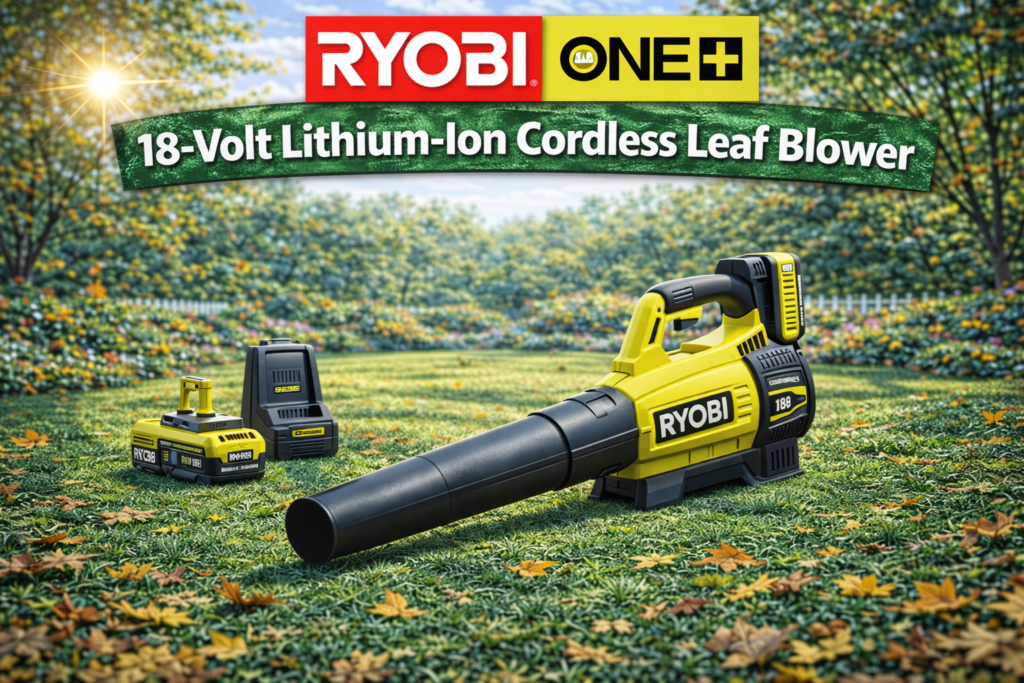
The RYOBI ONE+ 18V Lithium-Ion cordless leaf blower is a lightweight and convenient yard-cleanup tool designed for homeowners who want cordless performance without the hassle of petrol engines. Built for small to medium yard tasks, this blower combines portability, decent airflow power and compatibility with the popular ONE+ battery system used across hundreds of Ryobi tools. It’s especially popular for clearing leaves from driveways, patios, decks and garages.
Below is a detailed review covering power, battery performance, features, and pros & cons.
RYOBI ONE+ 18V Cordless Leaf Blower (Bare)
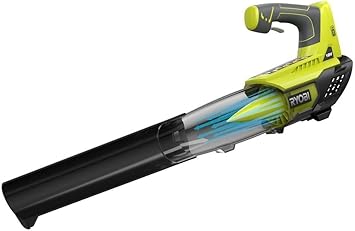
A lightweight, ONE+ compatible blower that makes quick cleanups fast and comfortable. It’s a practical choice if you already own RYOBI 18V batteries, but expect limited runtime for large jobs unless you pair it with higher-capacity batteries.
Overview
You’re looking at a compact, battery-powered blower designed for quick cleanup tasks around the yard, driveway, and patio. This bare-tool version ships without a battery or charger and is bulk packaged, so you should plan on using an existing RYOBI ONE+ 18V battery or purchasing one separately. The blower emphasizes portability and convenience: it delivers up to 100 MPH of airspeed and up to 280 CFM of airflow using a jet-fan design and a variable-speed trigger.
What this tool is built for
Key specifications at a glance
| Specification | Detail |
|---|---|
| Rated airspeed | Up to 100 MPH |
| Rated airflow | Up to 280 CFM |
| Power system | RYOBI ONE+ 18V (battery sold separately) |
| Product type | Bare tool (no battery/charger) |
| Special features | Variable speed trigger, debris scraper |
| Weight (package) | Approx. 2.27 kg (package) |
| Packaging | Bulk packaged; generic box |
Performance and real-world behavior
You can expect responsive, short-burst performance suitable for tidying tasks. The jet-fan design focuses airflow for a stronger stream relative to its size, which helps when you need to dislodge damp leaves or compacted grass clippings. In everyday use you’ll appreciate the variable speed trigger — you can feather airflow to avoid scattering light debris or crank it up for heavier patches.
What to expect in practice:
Battery compatibility, runtime, and suggestions
Because the blower is part of the ONE+ system, you get the advantage of cross-compatibility — your existing RYOBI 18V batteries will fit this unit. That’s the main selling point for an owner of other ONE+ tools.
Practical battery tips:
Design, weight, and ergonomics
The blower’s body is molded plastic with a pistol-grip handle and a trigger-style throttle. It’s noticeably light and balanced — you’ll find it easy to hold for extended periods and maneuver around landscaping features. The inclusion of a debris scraper on the nozzle helps loosen stubborn material without switching tools.
Comfort and control features:
Maintenance, care, and storage
Regular upkeep is straightforward and will keep your blower performing as expected:
Suitability and use cases who should choose this blower?
You should look elsewhere if:
Practical tips to get the best results
How this compares to alternatives
Packaging and buying notes
This listing is for a bare tool and arrives bulk packaged. That means no retail-style box, no included battery or charger, and minimal accessory packaging. If you do not already own ONE+ batteries, include at least one compatible battery and a charger in your purchase.
Final takeaway
If convenience, lightweight handling, and ONE+ compatibility matter to you, this blower is a solid tool for routine maintenance and quick cleanups. It shines when paired with a healthy, higher-capacity 18V battery and falls short only when you expect the sustained heavy-duty output of larger cordless or gas-powered blowers. Choose this model if you prioritize portability and a familiar battery ecosystem over full-scale leaf-moving power.
FAQ
No special battery is required, but this unit is part of the RYOBI ONE+ 18V system. Any RYOBI ONE+ 18V battery will fit, from compact packs to higher-capacity units. Runtime and power will vary by battery capacity — larger Ah ratings give longer run times.
Runtime depends on battery size and how hard you run the blower. With a small 1.5–2.0Ah battery expect short sessions (often under 10–15 minutes on high); 4.0–6.0Ah batteries can extend use to 20–40 minutes depending on speed setting and workload.
It will handle light to medium wet leaves with effort, but it’s not optimized for heavy, compacted piles or waterlogged debris. For large volumes of wet leaves, a higher-voltage or gas blower will be more effective.
Battery blowers like this are generally quieter than gas models but still produce noticeable noise at full throttle. Use lower speed settings for routine tasks to reduce noise, and check local regulations for allowed hours of operation.
Keep the nozzle and debris scraper clear of buildup, wipe down the housing after use, and store batteries in a cool, dry place. Avoid submerging the tool or exposing it to heavy rain. Periodic inspection for cracked housings or loose fasteners is also recommended.
If you already own RYOBI ONE+ batteries and a charger, buying the bare tool saves money and avoids duplicate batteries. It’s a cost-effective way to expand your ONE+ toolset without paying for hardware you don’t need.