Last Updated on February 26, 2026
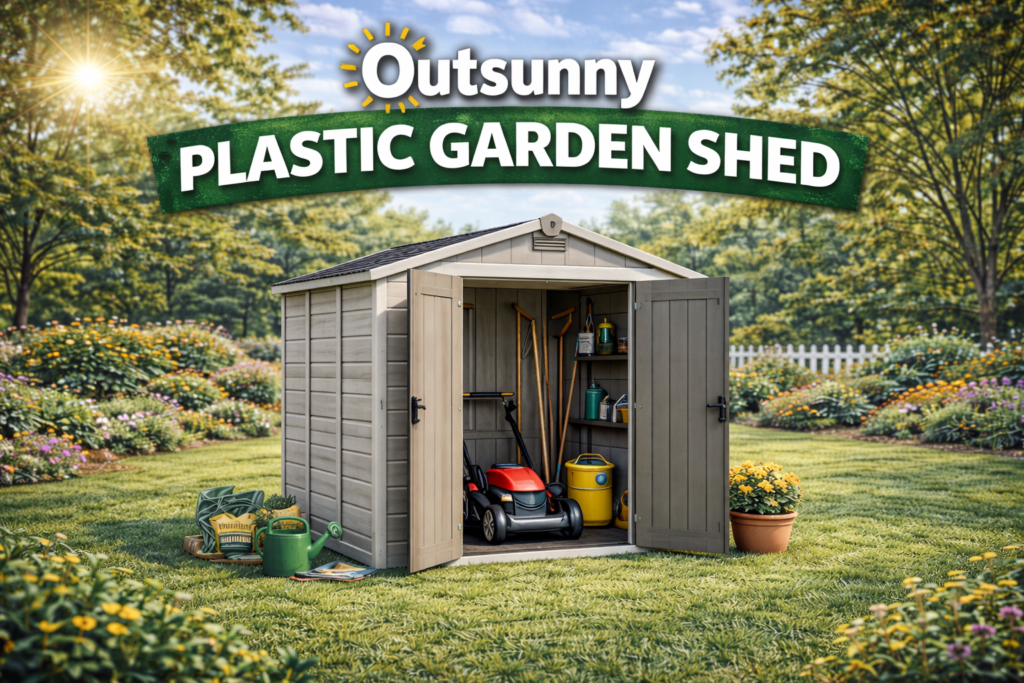
The Outsunny plastic garden shed is a versatile and weather resistant outdoor storage solution designed to keep your tools, lawn equipment, and seasonal items neatly organized and protected. Built with durable, high quality plastic panels, this shed resists rust, rot and peeling making it ideal for low maintenance garden storage. Lightweight yet strong, Outsunny’s design allows for easy assembly and long lasting performance without the need for painting or regular upkeep.
Perfect for small to medium outdoor spaces, the Outsunny plastic garden shed often features double doors for convenient access, ventilation windows to reduce moisture buildup, and a secure roof that withstands wind and rain. Whether you’re storing a lawn mower, bicycles or gardening tools, this shed offers a practical and affordable way to extend your outdoor storage capacity.
We’ll highlight key features, installation tips, and reasons why this shed is a popular choice for homeowners seeking reliable outdoor storage.
Outsunny 4x5FT Lean-To Plastic Garden Shed
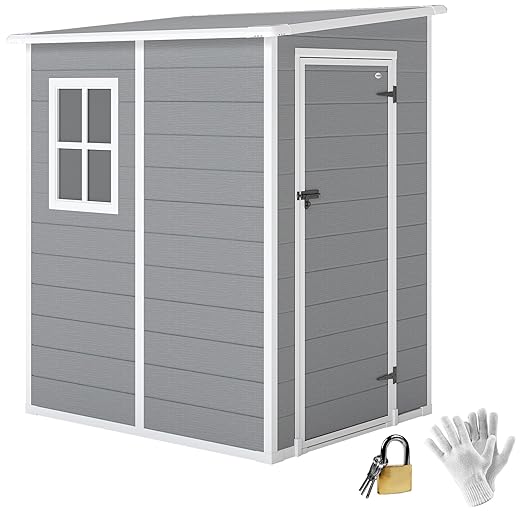
If you need an affordable, space-saving storage solution for tools and seasonal gear, this shed covers the basics with weather-resistant materials and a lockable door. Expect some effort during assembly and consider anchoring or floor reinforcement if you plan to store heavy items.
Overview
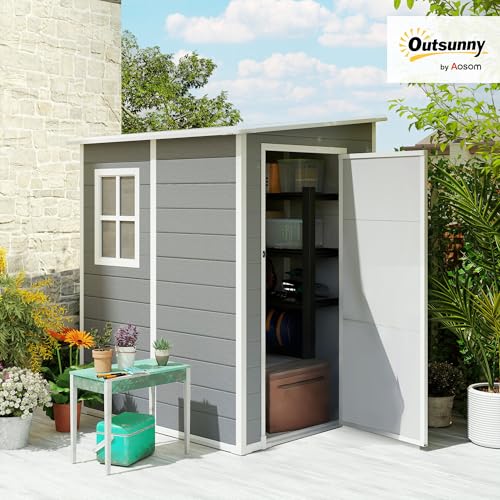
You’re looking for a compact outdoor storage solution that won’t rot, needs minimal upkeep and can be tucked against a wall or fence this lean to style plastic shed is designed for that use case. It’s built from aluminium alloy framing and polypropylene (PP) panels, offering a low-maintenance alternative to timber. With a small footprint and an integrated floor, it’s aimed at homeowners who need organised storage for garden tools, small power equipment, bikes, or seasonal items without committing to a large timber or metal shed.
Key design points and intended use
What you get in the box
Specifications snapshot
| Specification | Detail |
|---|---|
| External dimensions (H x W x D) | 192 x 122 x 149 cm |
| Internal floor space | 102 x 129 cm |
| Product volume | 2.65 m³ |
| Material | Aluminium alloy frame; PP panels |
| Item weight | 32.5–45.5 kg (packaged varies) |
| Floor | Integrated plastic floor panels |
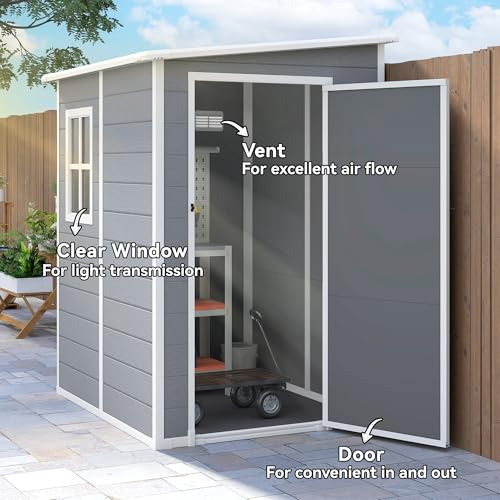
| Extras | Window, vent, lock with 3 keys |
What fits well inside
What doesn’t fit comfortably
Assembly and installation: realistic expectations
You should plan on a multi-hour build (users report 3–6 hours depending on experience). Two people make several steps much easier, especially lifting and aligning roof panels. The instructions are labelled and parts are identifiable, but there are precision alignment steps that take time. You’ll need a level, rubber mallet, and basic hand tools; the package includes gloves.
Anchoring and site preparation
Practical tips for a more durable installation
Weather performance and maintenance
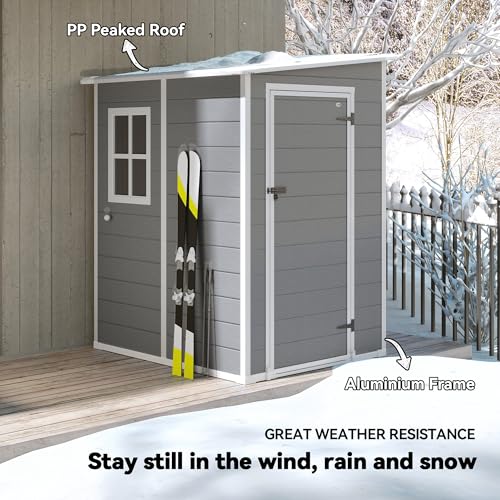
The PP panels and aluminium framing resist rot, paint flaking and most rusting issues that affect timber or untreated steel. UV-resistant panels will slow fading but prolonged exposure to high sunlight can still cause surface chalking over many years. The included ventilation helps reduce condensation, but you should avoid storing wet items inside long-term.
Routine maintenance
Security and practicality
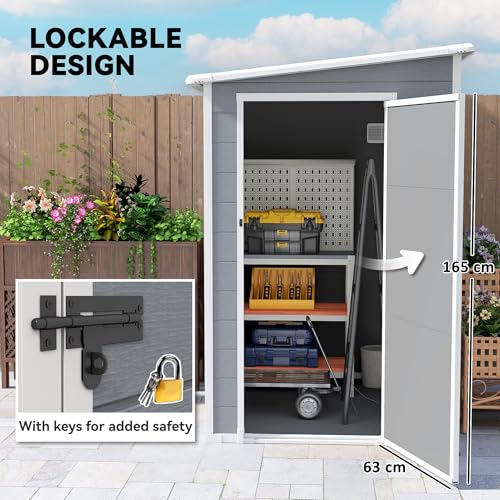
The latched door with a keyed lock is a practical deterrent for casual access; it’s not a commercial vault. For higher security, bolt a small hasp-style padlock to an interior bracket and consider motion sensor lighting near the shed.
Materials and longevity
The combination of aluminium framing and PP panels gives you a corrosion-resistant structure that should outlast untreated wood in wet climates. The tradeoff is that significant impacts or concentrated loads can crack plastic panels where metal or thicker steel would deform instead. If you treat the shed as a dry storage area for medium-weight items, you’ll extend its useful life.
Who this suits best
Who should look elsewhere
Final considerations before you buy
Overall, this lean-to plastic shed gives you a low-maintenance, reasonably secure storage option that fits small yards and tight corners. You’ll trade some heavy-duty robustness for ease of care and a lower price point, so match the shed to the items you intend to store and plan the base and anchoring accordingly.
FAQ
You can assemble many of the components solo, but several steps — especially placing and aligning the roof panels — are much easier and safer with a second person. Plan for at least a 3–6 hour build time and have basic hand tools ready.
Paving slabs or a level compacted base are acceptable and commonly used. The key factors are flatness and firmness: avoid soft ground. If you expect heavy loads, a concrete slab is more durable and reduces movement that can misalign the door.
Use ground anchors or bolt the base to a prepared slab or timber foundation. Adding weight to the corners with paving slabs or concrete pavers under the floor corners helps. Anchoring prevents uplift; rely on fasteners rated for your soil or base type.
The plastic floor handles typical garden equipment but is softer than plywood or metal. For heavier items or sharp tool storage, place a sheet of exterior-grade plywood over the floor to spread the load and protect the panel surface.
The shed is designed to resist rain and UV; panels are water-resistant and the peaked roof sheds water. However, joints and panel overlaps can allow some water ingress in extreme driving rain if the shed isn’t perfectly level or if seals aren’t applied. Applying silicone to vulnerable joints can improve weatherproofing.
You can fit thin insulation panels inside the walls and run a mains feed to the shed, but follow local electrical regulations and use an electrician for wiring. Insulation helps temperature control and reduces condensation but may slightly reduce internal space.