Mountfield SP41 Petrol Lawnmower – Review & Features
Last Updated on October 8, 2026
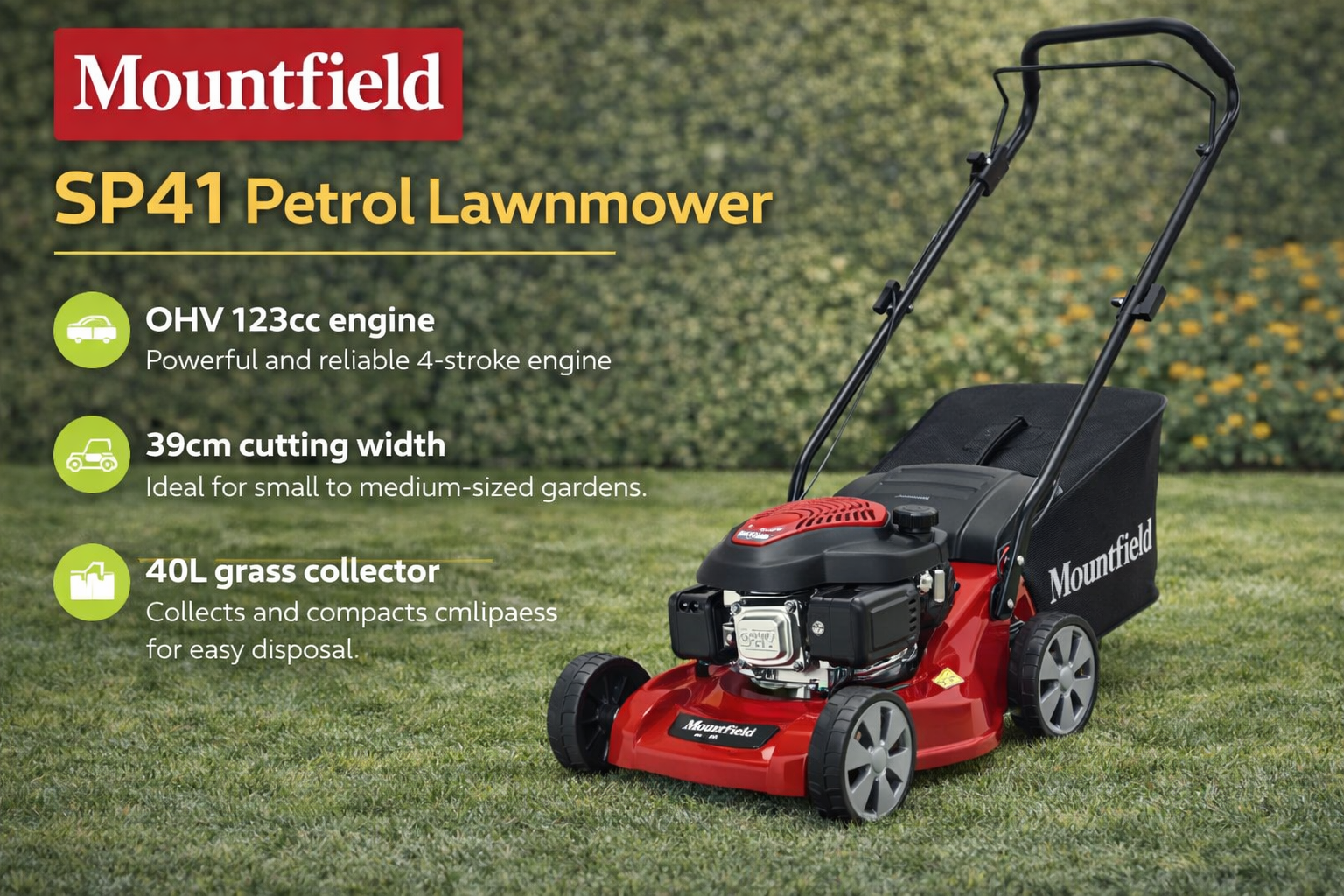
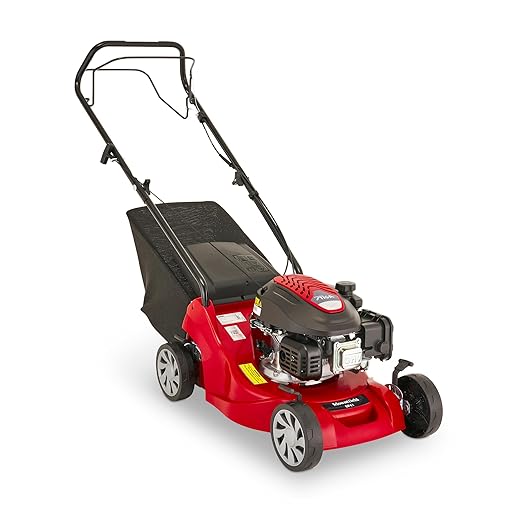
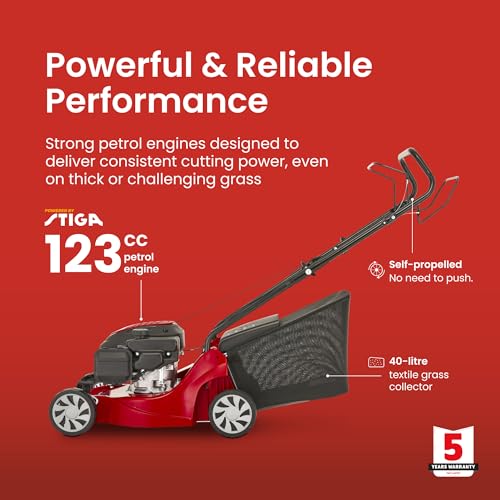
The Mountfield SP41 Petrol Lawnmower is a compact and reliable mower designed for homeowners who need efficient cutting performance for small to medium sized gardens. Powered by a 123cc STIGA petrol engine, it delivers consistent performance and is easy to start, making it a practical choice for regular lawn maintenance.
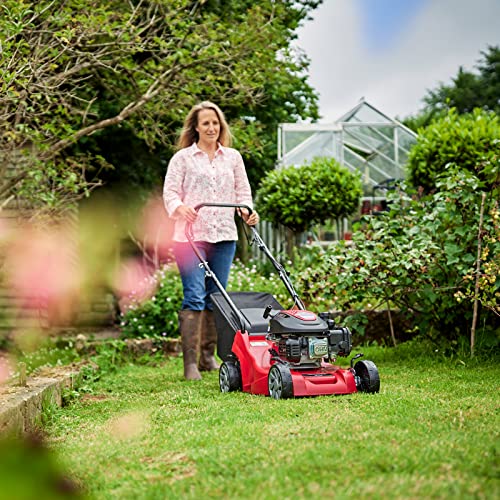
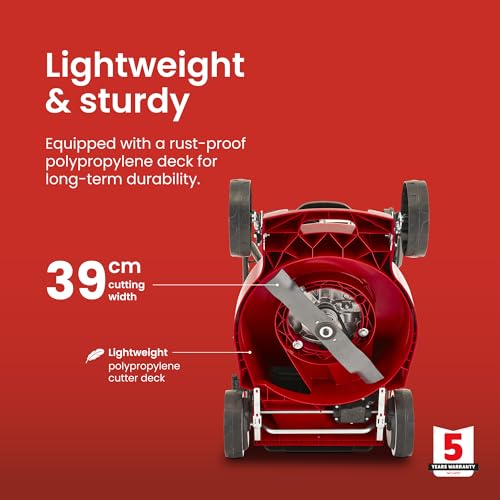
With a 39 cm cutting width, the SP41 is easy to manoeuvre around tight spaces, flower beds and garden edges. It also features a self propelled drive system, reducing the effort needed when mowing and making it suitable for slightly uneven lawns.
The mower includes five adjustable cutting heights (25–70 mm), allowing you to customise the finish depending on your lawn’s condition. A 40-litre grass collection bag helps reduce interruptions, while the lightweight polypropylene chassis offers durability without adding extra weight.
Overall, the Mountfield SP41 is a practical, affordable and easy to use petrol mower, ideal for homeowners looking for reliable performance without the bulk of larger machines.
This mower delivers dependable, predictable performance for small to medium plots where manoeuvrability and easy starting matter. It offers an efficient mix of power, self-propelled assistance and compact storage without pushing the price into premium territory.
Effective cutting across a range of grass heights with 39cm deck
Self-propelled drive reduces fatigue and improves control
Lightweight polypropylene chassis for easier handling and storage
Convenient 40L collector that’s simple to empty
Reliable ST120 autochoke 123cc engine that starts easily
Cons
Polypropylene body is lighter but less robust than steel at impact points
Handle folding and some fasteners could be easier to operate
Collector capacity may be small for larger lawns
Overview
You need a straightforward petrol mower that will start reliably, be easy to push around beds and paths, and store away without fuss. This self-propelled machine with a 39cm cutting width is designed precisely for that remit: it balances usable engine power, a compact footprint and features aimed at reducing the manual effort of mowing.
Who this mower is for
Homeowners with small to medium sized gardens (up to around 250 m²).
Users who prefer petrol power and want a self-propelled drive to cut down on effort.
Anyone needing compact storage and a lightweight machine for easier handling.
Key engineering and design highlights
A 123cc ST120 autochoke engine tuned to produce steady torque for typical domestic turf.
A 39 cm cutting deck that hits the sweet spot between manoeuvrability and cutting swath.
A polypropylene chassis that reduces overall weight while resisting corrosion.
Five cutting height positions to adapt to seasonal grass conditions.
Practical use and ergonomics
You’ll notice the mower is significantly lighter than equivalent steel-deck machines. That makes lifting the front over uneven ground or transporting it to storage easier on your back. The self propelled drive assists forward movement, so you steer more than you push; this is particularly valuable on level or slightly undulating lawns.
Controls are basic and purpose-driven: a single lever engagement for the drive and a hand-operated safety/engine kill. The handle folds forward for storage, which saves shed space, although the folding knobs require a few turns and careful handling to avoid losing small nuts. Assembly out of the box is straightforward and mostly requires basic hand tools.
Performance on different grass types
Short, well-maintained lawns: you’ll get clean, even results with the blade and 39cm deck. It’s easy to set a low finish if you prefer a neat appearance.
Long or slightly overgrown grass: the engine has enough torque to handle tougher cuts, though you’ll benefit from raising the deck and taking slightly slower passes.
Wet grass: the collector will fill faster and the blade may struggle to shed clippings; for best results, mow when grass is damp-to-dry rather than saturated.
Maintenance and serviceability
Air filter and spark plug are accessible for routine checks.
Polypropylene body panels mean rust isn’t an issue, but take care around fastener points and the cutting deck where impact damage is more likely.
Engine uses conventional petrol and light two-stroke-style service intervals; the autochoke simplifies starting after fuel sits idle.
What you get in the box
Mountfield SP41 self-propelled lawnmower unit
0.75L fuel tank (supplied for initial use)
0.5L engine oil container
40L grass collector
Specifications snapshot (at a glance)
Feature
Specification
Cutting width
39 cm
Engine
123cc ST120 autochoke petrol
Drive
Self-propelled (single-speed)
Cutting height positions
5 positions (approx. 22–80 mm)
Collector
40 L
Weight
~20–22.9 kg (depending on configuration)
Storage
Fold-away handle
Advantages in everyday use
The self-propelled drive reduces forward pushing effort, which is most noticeable across medium patches of lawn.
The lightweight chassis cuts down manual lifting and transport strain.
Folding handle and compact footprint make it convenient if your shed space is limited.
Autochoke technology means fewer stubborn cold starts after storage.
Known limitations and sensible expectations
The polypropylene body is a trade-off: low weight and corrosion resistance at the cost of sacrificial impact protection compared with steel. You should avoid heavy contact with curbstones, raised beds or concrete edges.
The 40L collector is practical for a tidy lawn but requires frequent emptying on longer cuts or when grass is tall. For larger gardens you may prefer a bigger-capacity collector or a mulching/side-discharge alternative.
Folding knobs and some small fasteners are plastic; treat these parts with a modicum of care during assembly and storage to prevent misplacement.
Buying considerations and tips
If your garden has steep slopes, test the self-propelled drive carefully — it helps on gentle inclines but is not a substitute for a mower designed for steep terrain.
Keep a small funnel with a flexible spout for refilling oil to avoid spills; the supplied oil bottle is useful but can be awkward when topping up in tight spaces.
Regularly clear the underside of the deck to avoid built-up clippings which will degrade cutting performance over time.
Final takeaway
This machine is a sensible choice if you want a petrol mower that is easy to get started, easy to move around your garden and easy to store. It isn’t designed to be an industrial workhorse, but for the majority of domestic lawns up to around 250 m² it delivers reliable, efficient mowing and a low-hassle user experience. If you prioritise weight, simple maintenance and a self-propelled drive over heavy-duty impact resistance or very large collector capacity, this model is worth serious consideration.
How often should you change the oil in this mower?
Change the oil after the first 5 hours of use, then at least once per season or every 25–50 hours of operation, whichever comes first.
Use the engine manufacturer’s recommended oil grade (check the engine manual). Common small petrol engines accept SAE 30 in warm climates or 10W-30 multigrade for a wider temperature range.
Warm the engine briefly before draining to help the oil flow. Drain, inspect for metal particles, refill to the correct level using the dipstick, then run and recheck.
Typical crankcase capacity for this class of mower is around 0.5 L (a 0.5L oil bottle is included), but always confirm the exact volume in the manual.
Dispose of used oil at an approved recycling facility.
Can you leave petrol in the tank over winter?
It is better not to leave ordinary petrol in the tank for long storage. Add a fuel stabiliser to fresh petrol if you plan to store the mower with fuel in the tank; follow the stabiliser manufacturer’s mixing instructions.
After adding stabiliser, run the engine for several minutes so treated fuel reaches the carburettor and fuel lines.
Alternatively, drain the fuel tank and run the engine until it stops to clear the carburettor. This prevents varnish and gumming that cause hard starting.
Be aware that modern E10 fuels are more prone to deterioration; avoid storing them in equipment for more than 30 days without stabiliser.
Store the mower in a cool, dry place with the fuel valve closed (if fitted) and follow local rules for storing petrol.
Is the grass collector compatible with larger capacity bags?
The mower is supplied with a 40 L grass collector designed to clip onto the specific rear frame and mounting points.
After-market larger bags are uncommon and may not fit the frame or clip securely. Using an incompatible bag can affect discharge flow and may stress the mounting points.
If you need larger capacity, check the manufacturer’s official accessories list for compatible larger collectors or a high-capacity kit.
Alternatives include reducing mowing frequency, using a mulching or side-discharge option (if available), or choosing a model with a factory larger collector.
How do you sharpen or replace the blade?
Always disconnect the spark plug lead before working on the blade to prevent accidental starting.
Tilt the mower safely with the carburettor and air filter uppermost to avoid fuel or oil leakage.
Use a block of wood to stop the blade turning, then loosen and remove the blade mounting bolt. Mark the blade orientation so you reinstall it facing the correct direction.
If sharpening, remove nicks and restore the cutting edge with a file or grinder, keeping the original angle. Replace the blade if it is cracked, heavily bent or worn.
Check blade balance after sharpening using a blade balancer or a nail in a wall; an unbalanced blade causes vibration and can damage the mower.
Refit the blade, tighten securely to the torque specified in the manual, and verify there are no leaks or loose parts before use.
Will this mower handle damp or long grass?
The mower will cut damp and moderately long grass, but best results occur when grass is dry or only slightly damp.
For long, dense or wet growth, raise the cutting height to the highest setting and take slower, overlapping passes to avoid overloading the engine and clogging the deck.
If grass is very long, remove excess length in two passes: first at a higher setting, then lower to final height.
Regularly clean the underside of the deck and keep the blade sharp to maintain cutting performance in heavier conditions.
Note that traction and braking can be reduced on wet slopes; avoid mowing steep, wet terrain for safety.
What routine checks should you perform before each use?
Check fuel level and oil level using the dipstick; top up as required.
Inspect the blade for damage and ensure the mounting bolt is tight.
Confirm the grass collector is correctly fitted and not damaged.
Check wheels and tyres for damage or debris and ensure good traction grooves.
Verify that all guards, shields and engine covers are in place and secure.
Test throttle/bail/kill controls to ensure they move freely and that the engine stops when the safety lever is released.
Look for any visible leaks, loose fasteners or unusual wear. Address faults before operating the mower.
Jayden Higgins
Click Here to Leave a Comment Below 0 comments
Leave a Reply:
We use cookies to ensure that we give you the best experience on our website. If you continue to use this site we will assume that you are happy with it.